 The 2019 Hyundai Kona EV at Seattles iconic Gas Works Park, that features the remnants of the Seattle Gas Light Company gasification plant that supplied power to the city from 1906 to 1956.Andrew McCredie (Editor’s note: This is the first in an occasional series called Power Trips, in which we go on a road trip in an electric vehicle to explore the pros and cons of traveling along the ever-expanding EV highway.)It was out of curiosity, not necessity that we pulled into the I-5 rest stop some 10 kilometres south of the Canada-USA border.Wed left North Vancouver an hour earlier with 422 kilometres of range in the 2019 Hyundai Kona EV, and as we pulled up to the rest stops two Level Two Webasto charging stations, the readout showed a robust 368 kilometres still remaining, more than enough to cover the 167 kilometres to our weekend destination, the Kimpton Alexis Hotel in downtown Seattle. But I was curious to see if anyone was plugged in, and sure enough a Kia Soul was getting a charge while its owner sat in the drivers seat reading a newspaper and drinking a coffee. The other station was not in use. With a full-charge range north of 400 kilometres, there was no need to plug the Kona EV into the Level 2 charging at an I-5 rest stop. Andrew McCredie Back on the road, we were quickly up to speed that limit, incidentally, being 112.65 km/h, or 70 mph with a museum visit and lunch in Bellingham next on the travel itinerary. Less than a half-hour later, we pulled into a parking spot right in front of the Spark Museum of Electrical Invention located in the heart of the university town.Again, no need to look for a charging station, so into the museum we went to check out the incredible collection of electrical innovations and device from the past 100-plus years. In particular were some true Holy Grails from the technology, including Thomas Edisons first successful electric light bulb and a section of Edisons DC power cable installed in New York City in 1883 and unearthed following the World Trade Centre terrorist attack in 2001. These priceless artifacts are part of the War of the Currents exhibit, which chronicles the battle between three of the worlds greatest engineers Edison, George Westinghouse and Nikola Tesla to determine the electric technology that would power the world AC or DC. That story is told in the Hollywood movie The Current War, which opened in October. Another electrifying exhibit is the nine-foot Tesla Coil that emits four million volts of lightning. Thats some 3,999,644 more volts than the Kona EVs maximum voltage generated from the 64.0 kWh lithium-ion polymer battery. After visiting the Spark Museum and driving off in the Kona EV, it was difficult not to feel a stronger connection, and certainly a more profound understanding, of the 21st Century technology Hyundai engineers have packed into the tidy crossover. Try as we might, we couldnt find a Bellingham restaurant with an over-riding electric theme, so we opted for our favourite local haunt, the Boundary Bay Brew Pub.Fueled on a bowl of beef stew and still no need for a charge up we were back on I-5 for the final push to the Emerald City, a 140-kilometre straight shot south along the Pacific coast. It should be noted here that there was no hyper-miling involved in this road trip nor will there ever be in our Power Trips series as speed limits were maintained, and admittedly exceeded during some highway sections I was just keeping up with the traffic flow, officer. Likewise, the onboard systems from navigation to sound system to climate control were all used with no thought to their affect on battery range. To that last function, when we left North Vancouver it was zero degrees centigrade, so the heat was blasting and the heated seats and heated steering wheel were turned up all the way.Traffic was surprisingly light for Black Friday, and in less than two hours the Konas Nav system had us pulling up to the Kimpton Alexis Hotel, just a couple of blocks south of the iconic Pike Place Market. One note on that Nav system: like most systems circa 2019, it conveys plenty of real time information, including traffic conditions on the road ahead. But its real appeal comes from the EV-related information, including nearby charging station icons displayed on the map and your current range in relation to the destination you have inputted into the system. Ive been driving EVs on a very regular basis now for almost a decade, and I still fret over range, often checking out current battery charge and doing quick calculations to ensure all is well. Of course, with most new model EVs touching, some cresting, a 400-kilometre full-charge range, this seems quite illogical and unnecessary. After all, how often do you look at your current range when driving a gasoline-powered vehicle? But, the fact remains that if you run dangerously low in gas, theyll most likely be a gas station at the next off-ramp. True, there might also be a
Origin: Power Trips: An electrifying road trip in a Hyundai Kona EV
Road
New Cupra Formentor hits the road ahead of mid-2020 debut
 Seat sister brand Cupra will finally put its first standalone model, the Formentor, on sale in the middle of next year, and new spyshots preview the final car’s design. As expected, the design stays wholly faithful to that of the earlier Geneva motor show concept, with the same profile and surfacing visible beneath this disguise. It’s the second production model to be badged a Cupra following the Cupra Ateca, and the first not to be based on a model from parent firm Seat. Cupra says the Formentor offers “the benefits of a performance car with the qualities of an SUV”. The Formentor takes styling cues from the Seat 20V20 concept shown at Geneva in 2015. As a coupé crossover, it also fits Seat’s vision for Cupra as a ‘premium performance’ brand, rather than as a producer of pure high-performance vehicles. The Formentor sits lower than most crossovers and features a sloping roofline, sharp sculpted lines on the side, a two-tone body and pronounced rear haunches. The front grille of the car takes cues from the Seat Tarraco large SUV, while the rear features a single LED light strip running the length of the car’s boot lid. While Cupra has yet to provide the Formentor’s dimensions, we know it’s lower, wider and longer than the Ateca on which it’s based in an effort to improve ride and handling as well as looks. . The concept car presented at Geneva features a 1.4-litre TSI petrol engine mated to an electric motor, providing a combined system output of 242bhp, and a WLTP-certified electric-only range of around 30 miles. The power is delivered via a dual-clutch DSG transmission. The use of a hybrid system such as the fits Seat’s plans to use Cupra as a ‘technological flagship’. Autocar understands a pure petrol version will be offered, too, but it’s not clear yet if this will come at the same time as the launch. The Formentor features the Volkswagen Group’s DCC chassis set-up system and differential lock along with progressive steering. Cupra says the system has been tuned so that it handles “majestically.” While no interior images have been revealed yet, Cupra says it features a leather-clad steering wheel and bucket seats, dark chrome trim on the dashboard, a digital cockpit and a 10-inch infotainment touchscreen. The Formentor takes its name from a peninsula on Majorca, following parent firm Seat’s convention of naming cars after Spanish geographical features. A production version of the Formentor forms a core part of Cupra’s plans to reach 30,000 sales within three to five years. The brand sold 14,400 models last year, a figure that includes Seat-badged Cupra models such as the Leon Cupra R. Cupra design chief Alejandro Mesonero-Romanos previously told Autocar that the new Formentor was “100% designed as a Cupra”, but added that “there could be Seat versions” of it in the
Origin: New Cupra Formentor hits the road ahead of mid-2020 debut
Gordon Murray’s T.50 will use fans to vacuum the supercar to the road
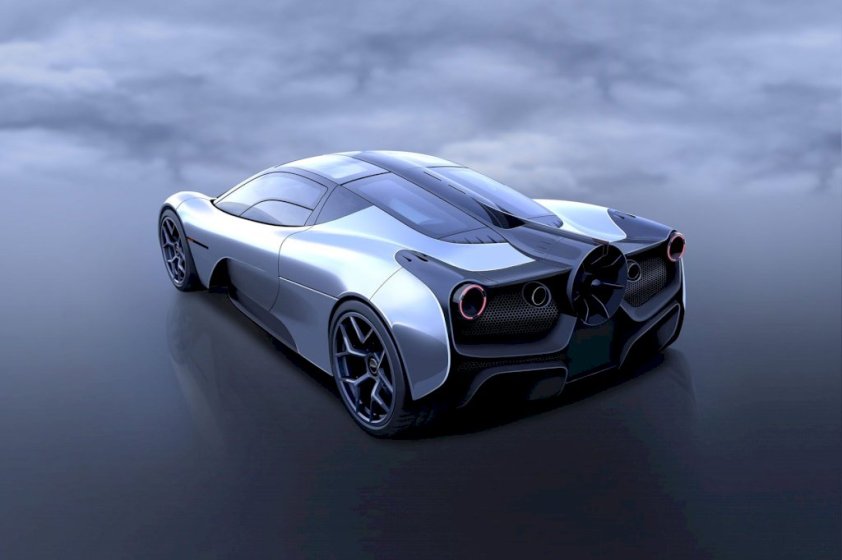 Gordon Murray has released the first renderings of his sequel-to-his-world-changing-McLaren-F1, and while it does indeed look like it has the potential to be the last great sports car, it still has a lot to live up to.Powering the new car, the T.50, will be the best engine in the world, a V12, displacing 3.9 litres and producing 650 horsepower. It will be built by famed engine builder Cosworth, and rev to 12,100 rpm.The styling is distinctly reminiscent of the 1990s McLaren F1, albeit slightly tweaked. Oh, and theres obviously now a huge fan protruding from its rear.Thats because the T.50 will also use aerodynamic technology based on fan car concepts from the past. The first car to use this tech was the Chaparral 2J, which had two snowmobile motors in the rear that would suck air out from under the car, sticking it to the pavement. The car was quickly banned from racing. The tech found itself in racing once more, however, in the Brabham BT46B Formula 1 car, which was also designed by Gordon Murray. Unfortunately, that car only raced once before team boss and future F1 chief executive Bernie Ecclestone shut down the project over concerns the upset from other teams could collapse the Formula One Constructors Association.The McLaren F1 was also supposed to have this fan tech, but Murray ran out of time to implement it. The T.50 will weigh just 2,160 pounds, much lighter than the 2,500-pound F1, so it will need all the help it can get from gravity and
Origin: Gordon Murray’s T.50 will use fans to vacuum the supercar to the road
Marque de Triomphe: Citroen centenary road trip
 Leaping years ahead, sometimes even decades, is what Citroën is most famous for. It has made cars that levitated. Cars whose headlights peered around corners. Cars with suspension resembling frogs’ legs, their wheels able to cross terrain usually the habitat of tractors. Citroën has made cars inspiring learned philosophical prose, cars transporting cinematic love stories, cars to traverse remote parts of the planet and cars whose ingenious inner plumbing helped save a French president from assassination. Citroën is still innovating today, if not at the rate that it did during its first 50 years of life, and it may be about to innovate more boldly again, if its latest Ami One urban car and centenary-celebrating 19_19 concepts are genuine in their ambition. But that’s in the future. Right now, we’re driving Citroën’s new C5 Aircross to Paris, birthplace of the company and location for various centenary celebrations, among them a 100-car display of Citroëns on the site of the original factory at Quai de Javel. The C5 Aircross doesn’t present the extreme styling of some of these cars and trucks, but its make-up certainly mirrors the emphasis on practicality and comfort that has distinguished some of the marque’s most famous models, from the 1934 Traction Avant to the 2CV and today’s C4 Cactus. The C5’s novelties include Citroën’s Progressive Hydraulic Cushion suspension, an ingenious rethink of the traditional bump-stop that allows the car to ride on softer springs and dampers without listing like a holed ship. The suspension is intended to complement comfort seats whose 15mm of extra foam topper aims to further soothe, a feature that’s standard on the C5’s top two Flair and Flair+ trims. Our car is the latter version, pulled by a 180bhp 2.0-litre diesel via an eight-speed automatic. The practical end of the equation is provided by an almost totally flat floor – rare, despite the domination of propshaft-free front-wheel drive these days – and a back bench whose centre seat is as big as those flanking it, another rarity. They’re hardly the reinvention of the motorcar, these features, but they’re evidence of Citroën’s rekindled quest to design exceptionally comfortable cars that are down-to-earth useful. The C5’s more softly absorbent ride is evident within metres of leaving Autocar’s road testing HQ in Feltham, where there are plenty of small-to-medium-scale bumps on the urban back roads to the M25. The Citroën sponges them up, often with a serenity redolent of the days when almost every French car rode with the supple elasticity of a bounding frog (no pejorative intended). But interruptions to this pillowy comfort occur, sometimes abruptly, if the C5 strikes a bigger, more invasive bump, the car being jostled in ordinary, unsophisticated style. Citroën’s old hydropneumatic suspension would cope better, but a chassis insider met later at the celebrations reveals that there are more Hydraulic Cushion developments on the way to tackle this issue. It would nevertheless be great to see more engineering solutions worthy of the man whose name appears on these cars. The restlessly inventive Andre Citroën was not only the driver of up-to-the-minute engineering, but also an energetic marketer of his company and his cars, the boldness of many of his ideas worthy of today’s tech companies. Take finding your way. Today, we have sat-nav, Google Maps, Waze, signposts and a (fairly) logical road numbering system. But when the car was young and most journeys short, navigating a route beyond familiar territory was at best frustrating, at worst hazardous. In 1921, Citroën began a collaboration with France’s Automobile Club that saw a network of Double Chevron-branded signposts – France’s first – deployed across the country. That way, his brand couldn’t fail to be noticed by motorists and just about every other road user. Today, those Double Chevron road signs are long gone, their directing and publicising jobs done. Andre Citroën might be amazed at the reach of the company now, even if it is far from the biggest car brand on the planet. It was an early player in new, not-quite-capitalist late 20th-century China, the world’s biggest car market and one of Citroën’s most crucial despite recent turbulence, it’s big in Europe, big in parts of Africa and intent on becoming bigger still, especially beyond its home continent. On the rather less adventurous venue of a wide, lightly trafficked autoroute, the C5 feels stable, relaxed and impressively quiet, the calm spoiled only by occasional wind noise and, if you work it hard, a diesel that airs too much of its rattling grumble. The relative novelty of sitting high in a Citroën (the C3 Aircross SUV is pretty new too, and few remember the Mitsubishi Outlander-based C-Crosser) adds an aura of light indomitability to the C5 mix as we do battle in the tollbooth grand prix. This is a race won with wits as much as grunt, although the 180 BlueHDI has plenty of that –
Origin: Marque de Triomphe: Citroen centenary road trip
Quebec Road Rage video on Facebook: They should have called the police…
 A video of a severe instance of road rage sparked between two Quebec drivers last weekend was captured on video and is now going viral on Facebook.Last Saturday afternoon, while traveling on the A-40 through LAssomption in Lanaudire, passenger James McKinnel spied some dangerous driving and got out his phone to record what was happening.In those 60 seconds, punctuated by cries of Les esties de jambons! The f**$ing hams! viewers can witness a white Volkswagen Jetta and a black BMW X3 engaged in some reckless manoeuvers on the traffic-dense highway.The video hit the news and found its way to the Sret du Qubec communications office. But it was nothing new, there. Spokesperson Capitaine Paul Leduc says every week the provincial police receive at least one video, if not two or three, involving reckless driving.In Quebec, said offense is subject not only to a $1,500 minimum fine and up to 20 demerits points enough to lose your drivers license but is also subject to criminal sanctions.If that road rage case would have caused a fatal accident and this one was very near to becoming a multiple-collision, says Capitaine Leduc these drivers might have been kept off the streets for a while, and faced up to 10 years of imprisonment.But although theres video proof of these actions and the license plates are easily recognizable, Sret du Qubec cant pursue the file. Without a confirmation of who was behind the steering wheel at the time the owner? Their kids? A thief? it cant investigate, nor send a summation. It means last weekends road rage video will go nowhere, besides on your relatives Facebook Wall unless the amateur cineaste lodges an official complaint and is willing to testify in court about what he witnessed.Only then would police officers have several means to catch these offenders, starting with images from surveillance cameras. In extreme situations, a reconstruction team could be called in to prove, for example, that this or that vehicle was traveling at such and such speed.When you see something like this, call the police. Dial 911 or *4141 and give us the details, emphasize Capitaine Leduc. At this point, we would have sent a patrol car and we would have asked Transports Quebec to turn its cameras toward the action. And believe me, there are a lot of those cameras in Montreals highway belt. We would have been able to collect videos needed for legal proceedings.There is one caveat, of course. Dont put yourself at risk, says Capitaine Leduc. We dont want you to cause an accident while trying to avoid another
Origin: Quebec Road Rage video on Facebook: They should have called the police…
Tory government pledges £25bn for road improvement
 Chancellor Sajid Javid has outlined a £25bn road network improvement plan to get underway in 2020, in a speech at the annual Conservative Party Conference. The scheme is planned to get underway in 2020, making use of a ‘national roads fund’ set aside by Javid’s predecessor Phillip Hammond. Further funding, Javid said, will come from taxes and borrowing, augmented by “record low interest rates”. The first works to be undertaken will include the completion of the dualling of the A66 Trans-Pennine expressway and A46 Newark bypass, and improvement works to Manchester’s Simister Island interchange. Work will also get underway on the new A248 trunk road between Cambridge and Milton Keynes, and the often-congested A12 in the east of England will be widened. Alongside works to improve journeys for drivers, Javid has reaffirmed a commitment to improving Britain’s public transport network. Bus services nationwide stand to benefit from a £220 million cash injection, with £50m devoted to creating the country’s first ‘all-electric bus town or city’. Javid said buses “haven’t been given the attention they deserve from politicians, but they are still the backbone of our public transport in most of the country”. Prime Minister Boris Johnson was instrumental in replacing London’s much-criticised ‘bendy’ buses with the New Routemaster, underpinning his 2012 London Mayor election campaign with a promise to improve the capital’s transport infrastructure. Also on the cards are a series of ‘superbus networks’, which will lead to councils building more bus lanes to encourage service providers to offer more routes. A trial will be held in Cornwall next year. Javid has also voiced an ambition for all city buses in the country to offer contactless payment, as the technology becomes more universally
Origin: Tory government pledges £25bn for road improvement
How the Volkswagen ID R conquered China’s toughest road
 The Volkswagen ID R was always going to set a new hill record on Tianmen Mountain’s Big Gate Road. Of course it was. For one thing, it was the first official timed run up the 6.776-mile ribbon of concrete, which features 99 tortuous turns as it winds 3609 feet up the spectacular mountain known as the Gateway to Heaven in China’s Hunan province, at an average gradient of 10.14%. The road was built in 2006 to reach the amazing Heaven’s Gate natural arch and other sights atop the mountain. A mammoth project, it snakes and winds up the steep, rocky peak, carved by ingenuity and sheer force of will at angles a road has no place being built. It’s normally only used by a fleet of tourist buses – but even the most committed driver of a Golden Dragon XML6700 would struggle to match Romain Dumas in VW’s 671bhp electric record breaker. A few cars have previously tackled the road in anger. Land Rover brought a 567bhp Range Rover Sport to the mountain, with Jaguar’s Formula E reserve driver Ho-Pin Tung summiting the hill in 9min 51sec. But that time was unofficial, and set on a slightly longer course. So what does Dumas’ new official time of 7min 38.535sec, at an average speed of 53.07mph, actually prove? The ID R’s previous record-breaking runs – an outright hill record on Pikes Peak; an electric Nürburgring Nordschleife lap record and an outright Goodwood Hillclimb course record – were set on famous, historic motorsport venues, allowing for direct comparison with a huge variety of proven machinery. People know what it means to lap the Nordschleife in 6min 05.336sec. But you shouldn’t dismiss VW’s Tianmen Mountain trip as nothing more than a publicity stunt. For one thing, any manufacturer-run motorsport programme is, at heart, a publicity stunt. While the ID R does offer some learning about performance EVs, it has relatively little in common with the newly revealed ID 3. It is intended as the ‘sporty figurehead’ of the ID family: in that ambassadorial role, VW absolutely had to find a showcase for it in China, both the firm’s biggest market and the world’s largest EV market. VW sold 3.11 million cars in China last year, and will launch local-market ID models next year. By 2023, VW is planning to offer 10 ID models in China – and the country will be a key part of its plans to sell one million electric cars worldwide annually by 2025. But where in China could VW go? The country isn’t exactly flush with grand, challenging and historic motorsport venues in the style of Pikes Peak (which held its first hillclimb in 1916) or the Nordschleife (which opened in 1927). The Shanghai International Circuit, built in 2004, might be firmly established on the Formula 1 calendar, but it’s not exactly inspiring. Without a historic venue to capitalise on, VW created its own. And instead of breaking a record, the aim was to set a standard for others – and then invite them to come and beat it. Tianmen Mountain was chosen because, as well as having a tough, twisting and scenic hillclimb-style road, it is one of China’s most famous tourist locations. Situated just outside the city of Zhangjiajie around 930 miles south-west of Beijing, the mountain draws masses of visitors all year round. VW agreed on a start and finish point with local officials to ensure future attempts use a standard course. While there might not have been an official time to beat, VW wanted to ensure the ID R completed the course as close to its potential as possible. Yet to even know what time was possible on such an unusual venue proved complicated. “All engineers like new challenges, and this was a big challenge,” says François-Xavier Demaison, VW Motorsport’s technical boss. “It’s difficult because the road is like something you’d find on the Monte Carlo Rally. To come here with a car that’s like a sports prototype, you have to be a bit crazy – but engineers are crazy.” VW Motorsport team members visited the mountain late last year, making several runs up the course to video it and capture data using a track logger. At a few corners, they also unfurled a tape measure to check the width of the road and ensure the ID R could actually get round it. The tightest corner – Turn 88 in the perilously twisty section the team named the Layer Cake – has a total radius of around six metres. The team didn’t have to adjust the steering lock – although, after the first practice run, they did increase the level of power steering in the car to make life slightly easier for Dumas. The team used the data information gathered from the site visit – and, in truth, plenty of guesswork – to settle on a base set-up. That included the big front and rear wings the ID R used at the high altitudes of Pikes Peak, rather than the far smaller wing (with drag reduction system) that was used for the Nürburgring and Goodwood. That choice was made due to the sheer volume of slow bends, although Demaison notes that the speeds were so slow the wings produced
Origin: How the Volkswagen ID R conquered China’s toughest road
Road restrictions for military-type vehicles: Quebec is backing off
 It came last month in the form of a letter sent by Société de l’assurance automobile du Québec (SAAQ) to 550 owners of original Hummers, Bombardier Iltis, Steyr-Puch Pinzgauers and Mercedes-Benz Unimogs:Because those military-type vehicles are designed as Quebec alleges as off-road vehicles, they dont comply with the Highway Safety Code, therefore they could no longer get a regular Je me Souviens registration.That affects recent model-year military-type vehicles, but also those with an antique status (15 years or older, in Quebec).Rather, those military-type vehicles would have to wear the C plate, meaning they would not be allowed anymore on:Quebec roads with a speed limit higher than 70 km/h; All Quebec highways, no matter the speed limit. Basically, the military-type vehicles wouldnt be allowed on almost all provincial roads.And they wouldnt be authorized on Autoroute 520 Cte-de-Liesse and Autoroute 15 Decarie in Montreal, nor on Autoroute 740 Robert-Bourassa in Quebec City suburbs, simply because these are considered highways even with their posted speed limit below 70 km/h.They were going to be totally banned…If Quebec was to rule this way, it would be the only Canadian province with such restrictions for military-type vehicles.But it could have been worse: The actual Quebec Highway Safety Code (article 21) forbids anybody from putting a vehicle into operation on a public highway () if it has been restricted to off-highway use by its manufacturer or importer.This provision was going to be enforced as a total ban on military-type vehicles from La Belle Provinces roads, but the Ministre des Transports du Qubec ushered in, by mid-July, a semi-less-dramatic arrêté ministériel, to be enforced this past 22nd of August.The news was brought to military-type vehicles owners by official SAAQ letters they received between mid-August to end of August. The communication, for which Driving.ca was able to get a copy, stated this: Upon verification, we received confirmations that their manufacturer, or importer, has restricted the use of these (military-type vehicles) for off-road use.Then: We invite you to visit one of our service points to get a new license plate and a new registration certificate. () We remind you that it is forbidden to drive with () and that you could, according to the Highway Safety Code, be liable to fines.Cost of those fines: $200-$300 plus fees (no demerit point).550 owners or… 3000?The (first) problem is, theres six times more military-type vehicles licensed in Quebec than what the government estimates, assesses Philippe Raymond, who is trying, with his fellow members from the Club Véhicules Militaires du Québec, to defuse the bomb.Why such a gap with official numbers?Because the SAAQs data base doesnt have a checkbox for military vehicles, says Raymond. And Ive been told that when they searched with keywords Jeep for the Willys and Dodge for the M37, they got all those other models Grand Cherokee, Wrangler, Caravan, Ram So they excluded Jeep and Dodge.For now.The second problem? As you can imagine, when 550 or 3000 people are told they cant drive their passion as freely as before, you see them stepping to the barricades.In our research for this story, we learned that some are daily commuting with their military-type vehicle to work or to pick up the kids at school.Some use them as emergency vehicles to help in natural disasters or search and rescue operations, as seen on this Amateur Radio Operator Bernard Giguère’s Facebook Page.Others are driving them to the campground or the chalet, on roads that my Mazda3 wouldnt be able to overcome, says Philippe Raymond.Ultimately, this resident of La Capitale Nationale, owner of a 1990 Humvee and a 1985 Bombardier Iltis (bought directly from the neighbouring Canadian Forces Base ValCartier), is planning a back-and-forth trip across Canada with his 4 teenagers next summer.But: If things stay as they are, it means I wont have a problem driving across the country but Ill have one when leaving Quebec!Stepping to the barricadesSo, those military-type vehicles owners are stepping to the barricades, especially since the Transport Quebec Minister, Franois Bonnardel, declared that the decision came after suppliers informed his government of potential dangers with these vehicles, in the event of an accident.Not true, maintain the owners interviewed by Driving.ca who, incidentally, are in constant communications with AM General and other military-vehicle manufacturers and distributors:Forget about that, Militaires are known to never give any information! blurts Vincent Simard, who owns a military-vehicles restoration shop in Lévis.Philippe Raymond confirms: I contacted the worlds three largest vehicle manufacturers. The three provided me with official documents from their engineering department stating that their vehicles were designed to run on any type of road and highway, but they have off-road capabilities adapted to military requirements. In
Origin: Road restrictions for military-type vehicles: Quebec is backing off
Road to regret: the cars we should have kept
 Like keen fishermen, Autocar’s writers are often spinning yarns about “the ones that got away”, but they’re not talking about elusive carp. If you’ve been lucky enough to own one of your dream cars, you might be familiar with longing for a machine you once owned. Whether through financial necessity, profit-hunting or just poor decision-making, these are the much-missed motors we let go. Subaru Impreza WRX My dark blue ‘bug-eye’ 2001 WRX stayed only a year, and that pains me. I bought it for three grand in 2011 and sold it for half that. You’d pay a bit more today, but finding a car like mine would be tricky: it was as discreet as a WRX could be and mechanically just as Fuji Heavy Industries had intended. Aside from its over-light steering, it did much of what a Lancia Delta Integrale Evo could do – accelerate, grip, turn and soak up B-roads with ease – with the significant advantages of feeling rock solid and costing buttons. Proof that beauty is skin deep. Richard Webber Triumph TR2 Special Ideally I’d have kept every car and bike I’ve owned, but selling them on has let me afford the next one, so I’ve no real regrets. Well, maybe one. Two. Three at a push. I do miss a Triumph TR2 Special (pictured), which was beautifully crafted, looked like a 1930s racing car, drove quite endearingly and was a one-off, so I won’t find another. It now lives in Germany. But if I’d kept everything I wouldn’t now have a Honda Africa Twin, which, in a ‘Zen and the Art of Motorcycle Maintenance’ way, I’m bonding with immensely. I’ll never sell it Matt Prior Porsche 911 S I’m probably the only person on the planet who sold a classic Porsche 911 and doesn’t like talking about it. With fantastic timing I managed to sell our 1970 911 S just before prices went crazy. Okay, mine wasn’t a perfect example by any means, but values went so high that it would have been worth investing a bit of money on sprucing it up. Doing that and then selling it on would have paid off our mortgage. But never mind. We did 67,000 miles in it, which included a drive to Sicily and back for our honeymoon. Colin Goodwin Nissan Micra Hard to believe a 1.0-litre Nissan Micra Mk2 could make the cut, but when you’ve put blood, sweat and tears (all literal, alas) into turning granny’s shopping car into a rally weapon (all exaggeration, alas), you grow quite fond it of it. All but the welding work was done my myself and mates, from swapping the shocks for Bilstein competition units to various safety upgrades and stripping out as much weight as humanly possible. The car cost £500 and the kit to make it eligible for the Formula 1000 (as in 1000cc – this was a 50bhp beast) Rally Championship another £1000 or so. I do have to admit, however, that the majority of the car you see here wasn’t the one I sold: an unfortunate roll wrote off most of this red devil, necessitating another shell… Jim Holder Jaguar XJS V12 HE I’ve never been a total fan of the XJS, which drives too much like a saloon, but its combination of velvet manners, extraordinary styling (and ever more so with time) and V12 power tempted me to buy a chestnut metallic 19,000-miler in 2007. I put 7000 totally reliable miles on it in nine years and only sold it because of a tax bill. I’ve regretted it ever since. The car’s amazingly original rust-free condition would be hard to repeat and I even liked its oh-so-’80s brown paint, despite my wife’s unprintably disparaging description of the hue. My regret led to some auction bidding for another later, but prices have risen substantially since my foolish sale. Richard Bremner Porsche 911 RS Carrera ‘It’ was a 1995 Porsche 911 RS Carrera. The 993-generation car. Rarer than a Ferrari F40 and probably the best air-cooled 911 of all to drive. I bought it in the early part of this century when such cars were cheap and sold it after two years to buy an old Chevy Camaro race car. It took two seasons of racing for the Camaro to run me out of money, so then I had no Porsche and no racing. Not good. But nothing like as bad as what happened to 993 RS prices after I sold: today my car would be worth at least £200,000. I’m too ashamed to admit in print what I sold it for back then. Andrew Frankel Volkswagen Golf GTI Obviously I should have kept them all. Life happens, though, and with the arrival of our daughter we needed a big, safe second-hand Saab 9000. The 1984 Volkswagen Golf GTI I’d had for almost 10 years had done so many miles, the odometer had gone on strike. It was only an eight-valve and there was no power steering, but it was a truly wonderful way to travel. I got about £800 cash for it, which was pretty good for a tired hot hatch, which is all it was. But it was an iconic one, too, which paid for a cot and lots of nappies. James Ruppert Peugeot 205 GTi After lots of bangers, the first nice car I ever owned was a 1988 1.6-litre 205 GTi, bought for the princely sum of £2500. It gave me 20,000
Origin: Road to regret: the cars we should have kept
Iconic Petty-raced Plymouth Superbird and Road Runner head to auction
 Two cars raced by Richard Petty in 1970 and 1971 are coming up for auction, and theyre real humdingers.If you havent guessed by now, the cars are a 1970 Plymouth Superbird; and a 1971 Road Runner. Both vehicles were raced by The King in period, bringing him many wins and helping to secure his place as one of the greats.When you think of the Plymouth Superbird, you are likely thinking of this exact car. Finished in distinct Petty Blue and wearing the number 43, it was the star of the show in 1970 and also the star of the Pixar movie Cars.The 1970 Superbird was built to lure Petty back to Plymouth after he had left to race for Ford in the 1969 season. Serious aerodynamics were just starting to become a thing in NASCAR racing, and the Superbird was the ultimate aero warrior, winning 33 out of 48 races, with 18 of those being Pettys. The 1971 Road Runner earned Petty even more wins, some 21 out of 46, and helped him become the first driver to make US$300,000 in yearly earnings.Both cars are now in immaculate condition, restored to perfection by Richard Pettys garage.Richard Petty himself will be at the auction to see the cars and sign a few autographs for the fans. The cars cross the auction block on August 2 at Mecums event in
Origin: Iconic Petty-raced Plymouth Superbird and Road Runner head to auction
 All about car